Few things are more frustrating than turning on the faucet or stepping into the shower and getting a weak trickle instead of a steady stream. Low water pressure isn’t just annoying — it can signal underlying plumbing issues that, if ignored, may lead to bigger (and more expensive) problems down the road.
If you’re asking, “Why is my water pressure so low?” here are the most common causes — and what you can do about them.
Table of Contents
1. Clogged Faucet Aerators and Showerhead Filters
One of the most common — and easiest to fix — causes of low water pressure is buildup in your fixtures.
Most faucets have a small screen at the tip called an aerator. Showerheads also contain small screens and flow restrictors. Over time, these components collect:
- Sediment
- Mineral deposits
- Rust particles
- Debris from aging pipes
Even a small amount of buildup can restrict water flow and make pressure seem lower than it actually is.
How to Fix It:
- Unscrew the faucet aerator.
- Rinse it under running water.
- Soak it in vinegar for 30–60 minutes to dissolve mineral buildup.
- Reinstall and test.
If your shower pressure is low, remove the showerhead and clean the internal screen the same way. If pressure improves after cleaning, you’ve likely solved the issue without needing a plumber.
2. Dirty Whole-House Water Filters
If your home has a whole-house filtration system, a clogged filter can significantly reduce water pressure throughout the entire house.
As filters trap sediment and contaminants, they gradually restrict flow. When the filter becomes saturated, water struggles to pass through.
Signs This May Be the Problem:
- Pressure is low at every fixture.
- The issue appeared gradually over time.
- It’s been more than 3–6 months since the filter was replaced.
The Solution:
Replace the filter cartridge according to manufacturer recommendations. In many homes, this simple maintenance step restores normal pressure immediately.
3. City Water Pressure Issues
Sometimes the issue isn’t inside your home at all — it’s coming from the municipal supply.
Cities regulate water pressure across neighborhoods. If you’re connected to city water, low pressure could be caused by:
- Water main repairs
- Nearby construction
- Seasonal demand increases
- Municipal pressure adjustments
- Fire hydrant use
How to Check:
- Ask your neighbors if they’re experiencing the same issue.
- Contact your local water department.
- Check for city service alerts online.
If the problem is coming from the city side, there may not be much you can do except wait — unless your home has a pressure-boosting system installed.
4. Pressure Regulator Problems
Many homes have a pressure reducing valve (PRV) installed where the main water line enters the house. Its job is to regulate city pressure to a safe level for your plumbing.
If the PRV begins to fail, it can:
- Reduce pressure significantly
- Cause fluctuating pressure
- Lead to sudden drops throughout the house
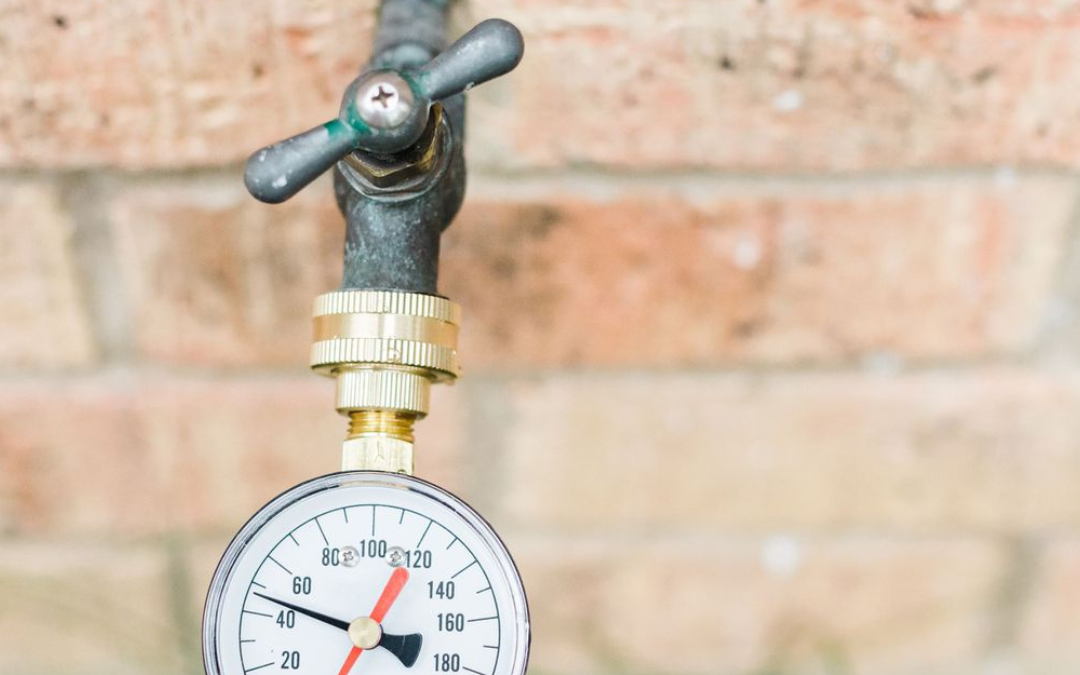
A plumber can test your water pressure with a gauge. Normal residential pressure typically falls between 40–60 PSI. If it’s much lower, the regulator may need adjustment or replacement.
5. Pipe Sizing Issues
Pipe sizing plays a major role in water pressure and flow.
If your plumbing system was:
- Improperly designed,
- Renovated without upgrading supply lines, or
- Built with undersized pipes,
you may experience weak pressure — especially when multiple fixtures run at the same time.
Common Scenarios:
- Adding a bathroom without increasing main supply size.
- Using ½-inch pipe where ¾-inch is needed.
- Long pipe runs that reduce flow capacity.
Undersized pipes restrict the volume of water that can move through your system, which feels like low pressure at faucets and showers.
Correcting pipe sizing typically requires professional plumbing modifications.
6. Hidden Leaks
Leaks reduce the amount of water reaching your fixtures. Even a small hidden leak behind a wall or under a slab can impact pressure.
Watch for:
- Unexplained increases in your water bill.
- Damp spots or water stains.
- Sounds of running water when fixtures are off.
If you suspect a leak, shut off all water in your home and check your water meter. If it continues moving, you likely have a leak that needs professional attention.
7. Corroded or Aging Pipes
In older homes — especially those with galvanized steel pipes — corrosion builds up inside the pipe walls over time.
This internal corrosion:
- Narrows pipe diameter.
- Restricts water flow.
- Reduces pressure.
- Can eventually cause leaks or pipe failure.
If your home is several decades old and pressure issues are widespread, repiping may be necessary.
How to Troubleshoot Low Water Pressure
Before calling a plumber, try this simple checklist:
- Clean faucet aerators and showerheads.
- Replace whole-house water filters.
- Check if neighbors have the same issue.
- Look for visible leaks.
- Test pressure with a gauge (available at hardware stores).
If these steps don’t resolve the issue, a licensed plumber can perform a system inspection and pressure test.
Don’t Ignore Low Pressure
Low water pressure might seem like a minor inconvenience — but it can signal larger problems like pipe restrictions, regulator failure, or hidden leaks. Addressing the issue early can prevent:
- Expensive pipe replacements
- Appliance damage
- Water waste
- Long-term plumbing repairs
Low water pressure is usually caused by one of three main categories:
- Restriction (dirty filters, clogged aerators, corrosion)
- Supply issues (city water pressure or regulator failure)
- System design problems (pipe sizing or outdated plumbing)
The good news? Many causes are simple maintenance fixes. But if the problem persists, a professional inspection can protect your plumbing system — and your wallet — in the long run. If you’re tired of weak showers and slow-filling sinks, it may be time to get to the root of the problem.