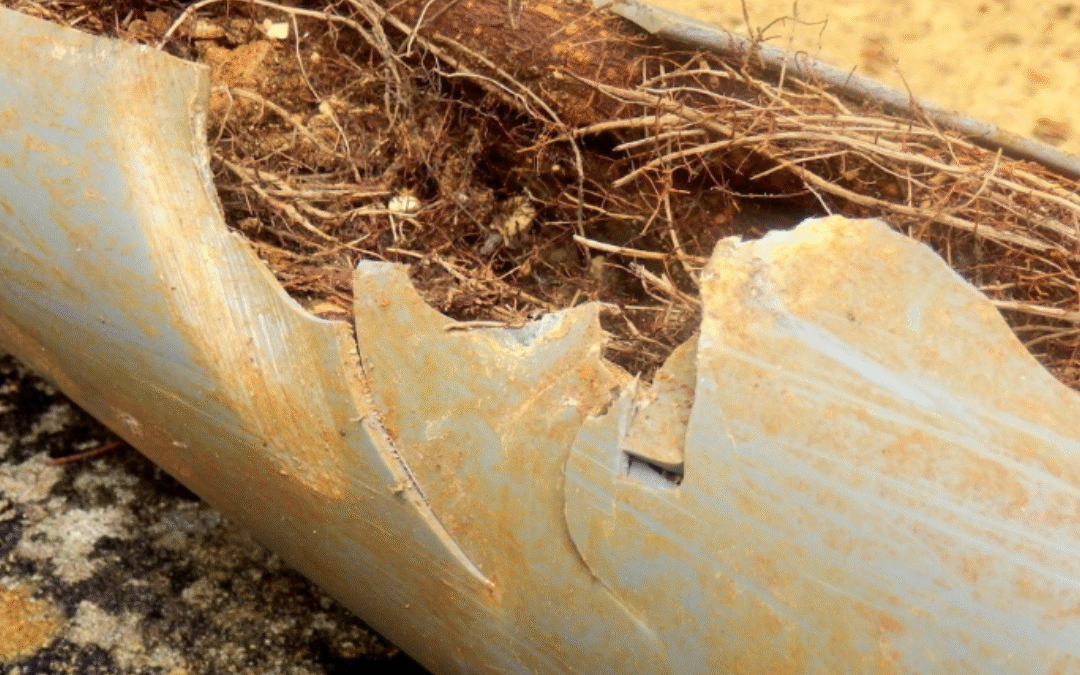
If your drains are slowing down, backing up, or making strange gurgling noises, there’s a good chance you might be dealing with a hidden issue underground:
Tree roots in your sewer line.
It’s one of the most common (and frustrating) plumbing problems homeowners face—especially in older neighborhoods across Northern Kentucky, Greater Cincinnati, and parts of Indiana. At True Flow Services, we deal with root intrusions all the time. As the top local plumbing company in the Tri-State region, we’ve helped homeowners clear, repair, and prevent these issues with honest pricing, no upsells, and real solutions that last.
Let’s break it down in a simple, real-world way so you understand what’s happening—and how to fix it.
Table of Contents
Why Tree Roots Grow Into Sewer Lines in the First Place
This is usually the first question homeowners ask:
“Why would roots even go into a sewer pipe?”
The answer is actually pretty simple—water and nutrients.
Sewer lines carry wastewater, which is full of moisture and organic material. Tree roots naturally seek out these conditions, especially during dry seasons.
Here’s how it happens:
- Older pipes (clay, cast iron, or even PVC with aging joints) develop tiny cracks or loose connections
- Roots find those openings and begin to grow inside
- Over time, they expand and create blockages
And once roots get in, they don’t just sit there—they keep growing.
In areas like Northern Kentucky and Cincinnati, where many homes have mature trees and older sewer systems, this becomes a very common issue.
You might not notice it right away, but as roots expand, they start to:
- Catch toilet paper and debris
- Slow down drainage
- Eventually cause full backups
This is why homeowners searching for plumbing services near me often end up discovering root intrusion as the real problem behind recurring clogs.
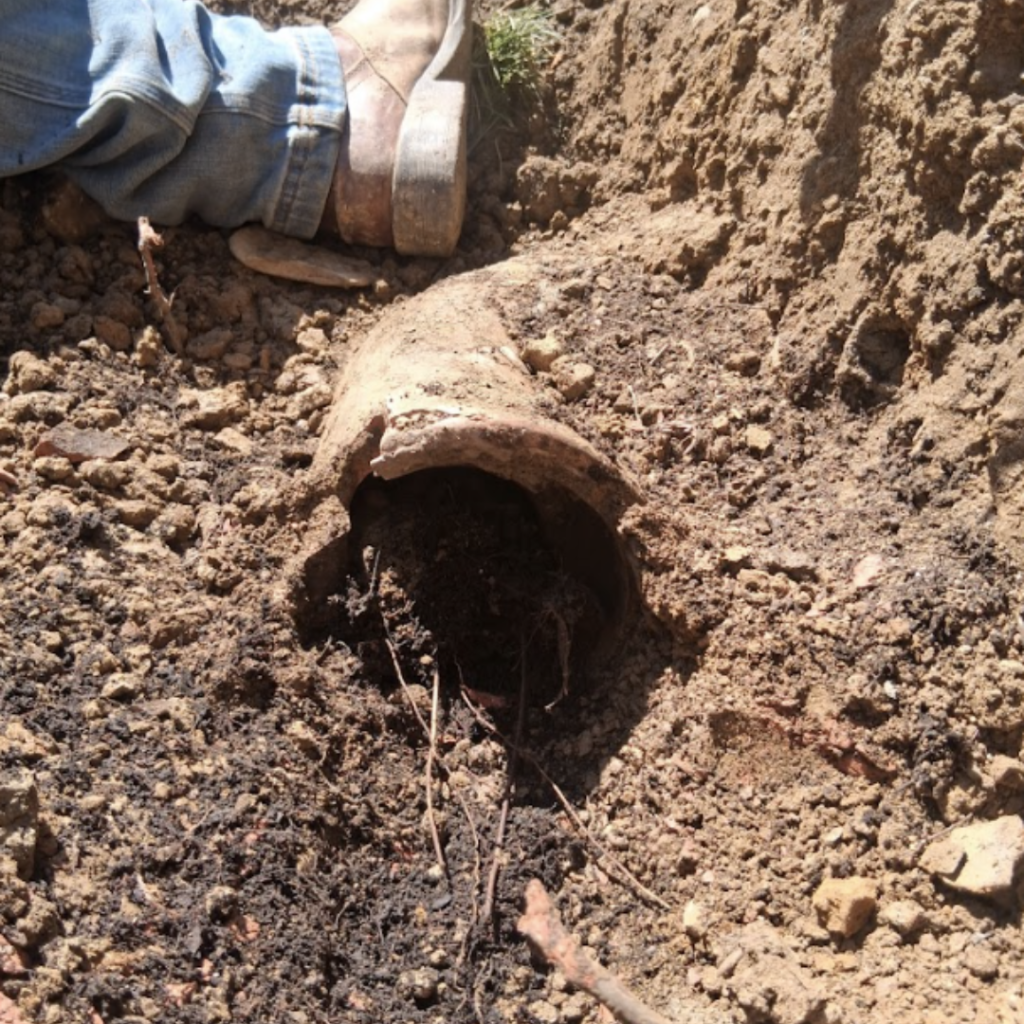
Signs You Have Roots in Your Sewer Line
Root problems don’t usually show up overnight. They build gradually, and the warning signs can look like normal plumbing issues at first.
Here are the most common signs to watch for:
1. Slow Drains Throughout the House
If multiple drains are slow—not just one fixture—it’s often a main sewer line issue.
2. Frequent Backups
If you keep clearing clogs but they come back, roots may be growing back inside the pipe.
3. Gurgling Sounds
Air trapped by partial blockages can cause bubbling or gurgling in toilets and drains.
4. Sewage Smells
A damaged sewer line can allow odors to escape into your home or yard.
5. Wet or Soggy Spots in Your Yard
Roots can crack pipes enough to leak water into the surrounding soil.
If you’re noticing any of these, it’s a good idea to call a plumber in Northern Kentucky or plumber in Cincinnati before it turns into a full sewer backup.
And if your drains are already struggling, you can start here:
See our drain cleaning services
The Most Effective Ways to Remove Roots from a Sewer Line
Once roots are inside your sewer line, they won’t go away on their own. They have to be physically removed or treated.
Here are the most common professional methods:
1. Drain Snaking (Augering)
This uses a rotating cable to break through roots and clear the blockage.
- Good for: Minor root intrusion
- Downside: Doesn’t fully remove roots, so they grow back quickly
2. Hydro Jetting
High-pressure water is used to blast roots and debris out of the pipe.
- Very effective at cleaning pipe walls
- Removes buildup along with roots
- Longer-lasting results than snaking
3. Root Cutting Machines
Specialized blades cut through thicker root masses inside the pipe.
- Best for heavy root intrusion
- Often combined with camera inspections
4. Chemical Root Treatments
Certain products can slow regrowth after roots are removed.
- Used as a maintenance solution
- Not a standalone fix for major problems
5. Sewer Line Repair or Replacement
If roots have caused serious damage, the pipe may need repair or replacement.
- Spot repairs for localized damage
- Full replacement for collapsed or heavily damaged lines
At True Flow Services, we typically start with a camera inspection to see exactly what’s going on inside your line. From there, we recommend the most cost-effective solution—not the most expensive one.
DIY vs Professional Root Removal: What Homeowners Should Know
A lot of homeowners wonder if they can handle root issues themselves.
There are store-bought root killers and drain cleaners—but here’s the honest truth:
They usually don’t solve the real problem.
DIY Options:
- Chemical root killers
- Basic drain snakes
- Store-bought cleaners
These can sometimes:
- Slow root growth
- Provide temporary relief
But they don’t:
- Fully remove root masses
- Repair pipe damage
- Prevent long-term issues
Professional Solutions:
- Fully clear the line
- Inspect the condition of the pipe
- Identify cracks or damage
- Provide long-term fixes
This is why most homeowners dealing with recurring clogs eventually call a professional plumber in Cincinnati or local expert.
Trying to manage roots without proper equipment often leads to repeated issues—and more cost over time.
How to Prevent Roots from Coming Back
Here’s something a lot of companies won’t tell you:
Removing roots once doesn’t mean they’re gone forever.
If the pipe still has cracks or weak joints, roots will come back.
Here’s how to prevent that:
Regular Maintenance
Scheduling periodic drain cleaning or hydro jetting can keep roots from re-establishing.
Root Treatments
Applying professional-grade treatments can slow regrowth.
Pipe Repairs
Fixing damaged sections removes entry points for roots.
Sewer Line Replacement (If Needed)
In severe cases, replacing old pipes with modern materials eliminates the problem long-term.
Smart Landscaping
Avoid planting trees too close to sewer lines when possible.
At True Flow Services, we help homeowners build a plan—not just fix the immediate issue.
And if you’re dealing with other plumbing concerns at the same time, like aging systems or water quality, you may also want to explore:
Read our guide on water filtration
Learn more about our water heater services
What Does It Cost to Remove Roots from a Sewer Line?
Cost depends on how severe the problem is, but here’s a general idea:
- Basic drain clearing: Lower cost, temporary fix
- Hydro jetting: Mid-range, more thorough cleaning
- Camera inspection + root cutting: More comprehensive solution
- Repairs or replacement: Higher cost, long-term fix
The key is catching the issue early.
A minor root intrusion is much cheaper to handle than a collapsed sewer line.
That’s why homeowners searching for plumbing services near me often benefit from having a professional inspection sooner rather than later.
At True Flow Services, we’re upfront about pricing and options—so you know exactly what you’re dealing with.
How True Flow Services Handles Sewer Line Root Problems
When it comes to something as serious as your sewer line, you want it done right the first time.
True Flow Services was founded by Kelley Shouse, a licensed plumber with over 20 years of experience, with one goal:
Provide honest, high-quality plumbing without the big company upsell.
Here’s what you can expect when you work with us:
- Accurate diagnosis using camera inspections
- Clear explanation of what’s going on
- Honest recommendations (repair vs replace)
- High-quality work that lasts
- Friendly, local plumbers who respect your home
We’ve built a strong reputation across Northern Kentucky, Greater Cincinnati, and the Tri-State region with:
And we stand behind every job we do.
You can also see real examples and tips here:
Follow us on Facebook
Watch more on YouTube
FAQs About Roots in Sewer Lines
What kills roots in sewer pipes permanently?
Nothing kills them permanently unless the pipe is repaired or replaced. Treatments can slow regrowth, but roots will return if entry points remain.
How often should I clear roots from my sewer line?
Typically every 1–2 years, depending on severity and tree proximity.
Is hydro jetting better than snaking for roots?
Yes. Hydro jetting removes more debris and provides longer-lasting results.
Can tree roots break a sewer pipe?
Yes. Over time, roots can crack, shift, or completely collapse pipes.
Is this covered by homeowners insurance?
Usually not, unless it causes sudden damage. Gradual root intrusion is typically considered maintenance.
Dealing With Sewer Line Roots? Let’s Get It Fixed the Right Way
If you think you might have roots in your sewer line, it’s not something to ignore.
What starts as a slow drain can quickly turn into a full backup—and a much bigger repair.
True Flow Services is proud to be the top local plumbing company serving Northern Kentucky, Greater Cincinnati, and the Tri-State region. We help homeowners fix problems the right way the first time—with honest pricing, no pressure, and solutions that actually last.
If something doesn’t feel right with your drains, it’s always better to get it checked early.